
Noticing your child squinting or tilting their head? Learn about amblyopia signs, causes, and treatment with Windsor Eye Care in Sandy Springs, GA.
Key Takeaways
- Amblyopia happens when the brain leans on one eye more than the other, and it has nothing to do with your child being lazy.
- Eye turns, blurry vision, cataracts, or a droopy eyelid can lead to it.
- Watch for squinting, head tilting, or trouble judging distance at home.
- A vision screening between ages 3 and 5 can catch it early.
- Treatment works best before ages 7 to 8, so early care matters.
Picture your child’s eyes and brain working as a team. Sometimes one eye sends a clearer picture than the other, so the brain starts to lean on the stronger one and tune out the weaker eye. It’s something we see quite often at Windsor Eye Care, and the good news is that catching it early can make a big difference.
Amblyopia is reduced vision in one eye because the brain and that eye aren’t communicating the way they should during early childhood.
Here’s the thing: There’s nothing “lazy” about your kid, even though you might hear the nickname “lazy eye” tossed around. Their brain just picked a favorite. This shows up often in babies and young kids, which is exactly why early checkups can help so much.
What Causes Amblyopia?
A few different things can nudge the brain toward favoring one eye. Knowing them helps you spot trouble sooner.
Eye Turns and Misalignment
With strabismus, the eyes point in different directions. One might drift in, out, up, or down while the other stays put. To avoid double vision, the brain quietly ignores the drifting eye, and that eye gets weaker over time.
Blurry Vision and Blocked Sight
Sometimes the picture itself is just fuzzy. A child who is nearsighted, farsighted, or has astigmatism might send a blurry image from one eye, so the brain leans on the clearer side.
Other times, something physically blocks the view. A cataract can cloud the lens, and a droopy eyelid can cover the eye while vision is still developing. Both give that eye fewer chances to grow strong.
Signs to Watch for at Home
You know your child better than anyone, so trust your gut if something feels off. Amblyopia can be sneaky since kids rarely mention that one eye sees less. Keep an eye out for these little habits:
- Squinting or shutting one eye to focus
- Tilting the head to see something clearly
- Trouble judging distance, like reaching for a cup and missing
These don’t necessarily mean something is wrong. It just means it’s worth a closer look.
When and How Your Eye Doctor Checks for It
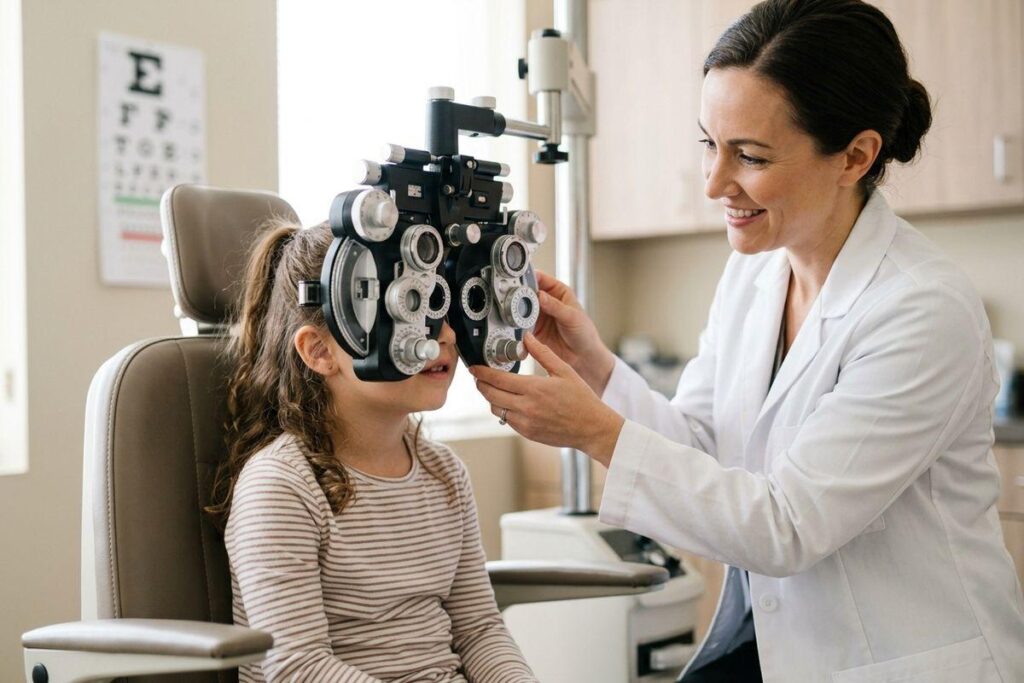
The good news is amblyopia is easy to look for. A vision screening between ages 3 and 5 is a smart starting point, and it’s quick. For little ones who can’t read a chart yet, the eye doctor can cover one eye and watch how your child reacts, which says a lot without a single word.
A full eye exam with our team goes deeper, checking how each eye focuses and how the two work together. It’s relaxed, kid-friendly, and over before you know it.
Who Faces Higher Chances?
Some kids have a bit more to keep an eye on. Children born early or at a smaller size can face higher chances of amblyopia. A family history of eye conditions can play a role too, so mention it when you book. Sharing that background helps your eye doctor know what to look for.
How Is Amblyopia Treated?
The good news? Treatment is often simpler than parents expect. Depending on your child’s needs, it may be as simple as glasses, a patch, or eye drops. We’ll walk you through every option and create a plan that fits your family’s routine. Common approaches can include:
- Glasses or contacts can clear up blur so both eyes send a sharp picture.
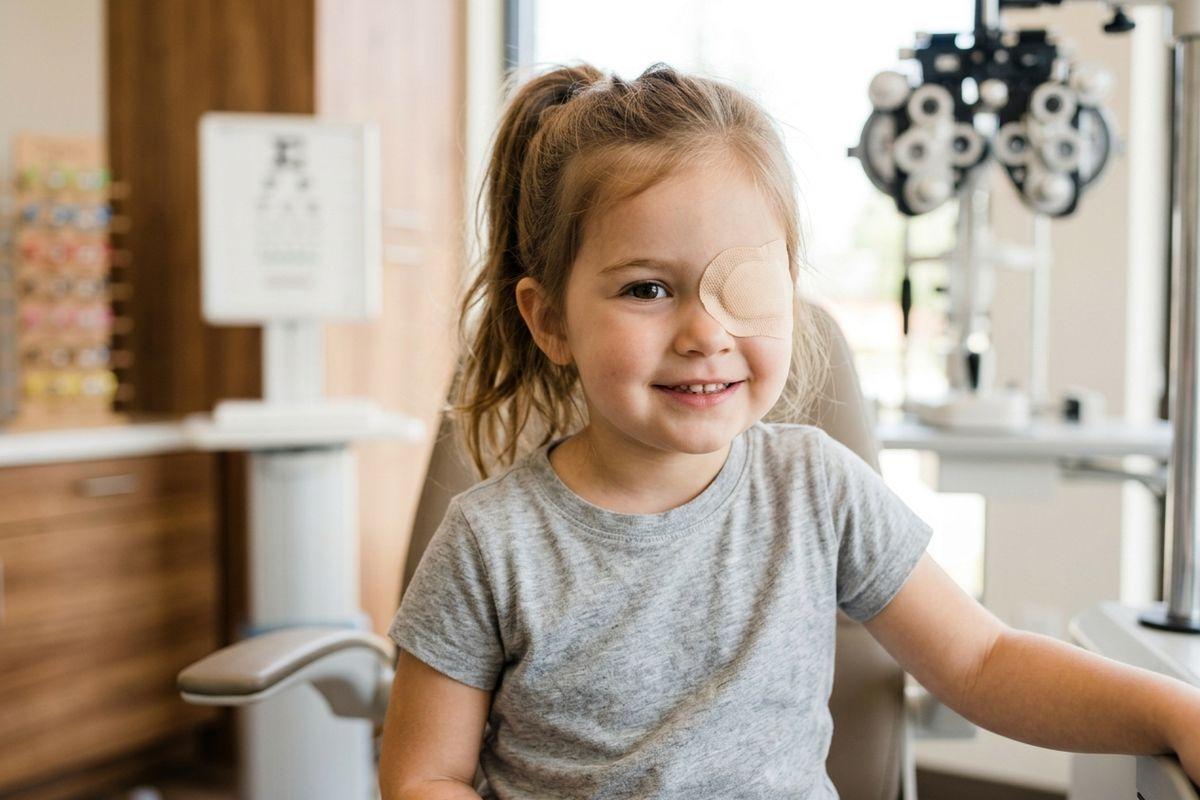
- An eye patch over the stronger eye gives the weaker one a chance to work harder.
- Blurring drops in the stronger eye do a similar job when a patch isn’t a good fit.
Why Early Care Matters
Timing makes a real difference. Care before ages 7 to 8 tends to help the most, since young vision is still growing and adapting.
Progress usually shows up over several months, not overnight, so patience pays off. Follow-up visits keep everything on track and let the team adjust the plan as your child improves.
Come See Us
Parenting comes with enough things to worry about, and your child’s vision shouldn’t be one of them. Whether you’ve noticed something that feels “off” or you just want peace of mind, we’re here to help. Our team loves getting to know families and making eye exams a positive experience for kids of all ages. We’d love to welcome you to Windsor Eye Care!