
Key Takeaways
- There’s no set minimum age for contact lenses, and readiness matters more than a birthday.
- Many kids start between ages 8 and 12, while some eye doctors suggest waiting until 12 or older.
- Good hygiene habits and comfort with touching the eyes are strong signs of readiness.
- Daily disposable lenses cut down on cleaning steps for younger wearers.
- A contact lens exam includes fitting, hands-on practice, and follow-up visits.
Your child comes home from soccer practice with foggy, crooked glasses again, and asks the question you knew was coming: When can they switch to contacts? Families often bring this up at Windsor Eye Care.
There’s no set minimum age for contact lenses, so the answer depends on your child’s maturity and hygiene habits rather than the number of candles on a birthday cake.
Some kids handle contacts well starting around age 8. Others do better waiting a few more years. Our team can look at how your child manages daily responsibilities and decide together with you.
Common Ages to Start Contacts
Kids between 8 and 12 often begin wearing contact lenses for myopia, or nearsightedness. Many eye doctors still suggest waiting until age 12 or older, since older kids tend to keep up with the routine on their own. Regular children’s eye exams help track how the prescription changes along the way.
Signs Your Child Is Ready
Watch how your child moves through a regular week. A child who brushes their teeth, packs a backpack, and finishes homework without three reminders is showing the same follow-through contacts require.
Clean hands and cared-for belongings matter too. If sports gear gets rinsed off instead of shoved damp into a closet, that’s a good sign. Listening to directions from adults counts as well, because lens care comes with steps to follow every single day.
Comfort with a Finger Near the Eye
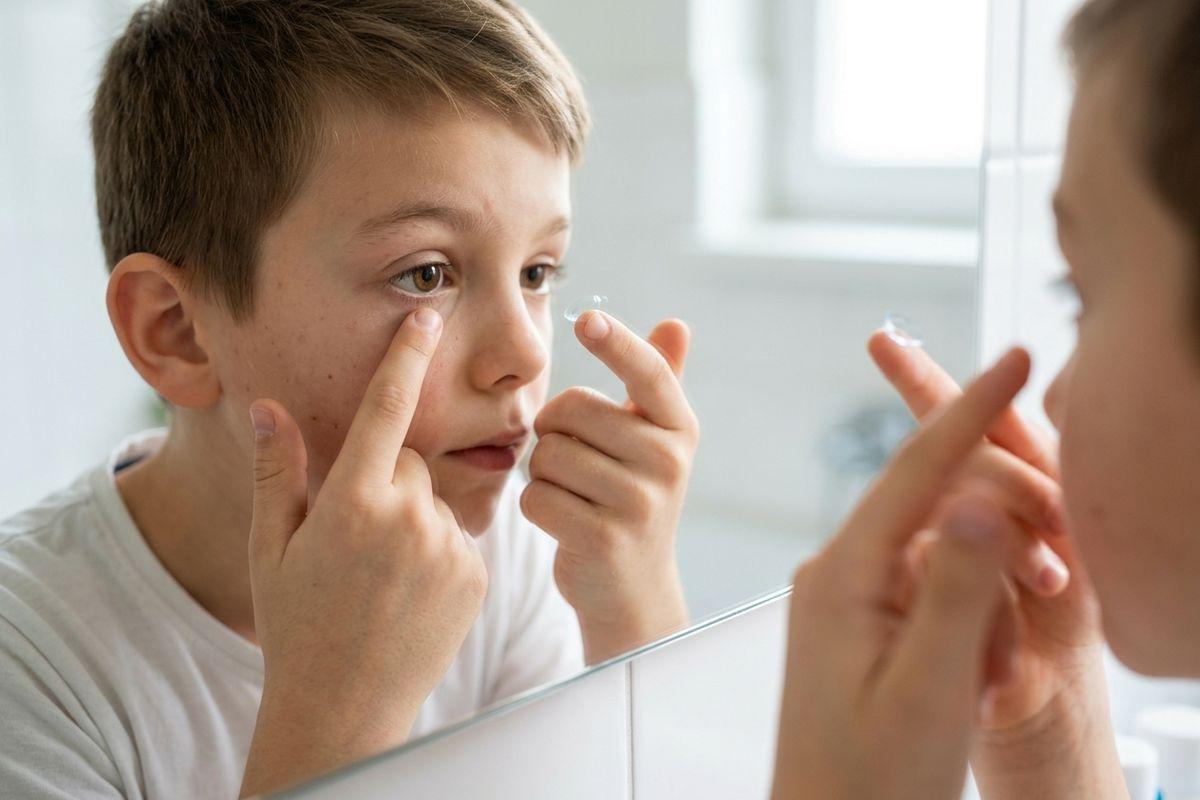
Some kids flinch at the thought of a finger near an eyelid. Others barely blink. Your child needs to hold an eyelid open and place a lens on the eye surface calmly, then take it out again at night without a struggle.
Why Kids and Teens Choose Contacts
Contacts give wider side vision than glasses, so your child sees a teammate coming from the left without turning their head. That freedom shows up during basketball, swim practice, and dance class, where frames slide, fog, or break.
Certain lenses may also help slow the progression of nearsightedness in kids. Our team can talk through whether that fits your child’s prescription.
Safety Habits and Risks Parents Should Know
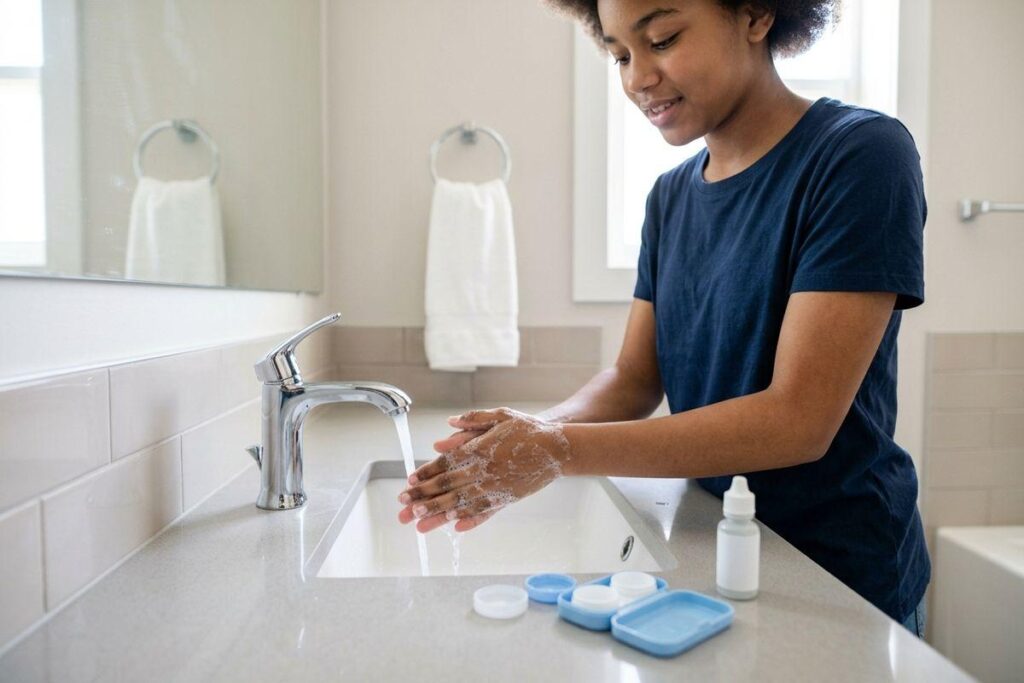
Your child needs to wash and dry both hands before every insertion. No shortcuts, even on rushed school mornings.
Keep water, saliva, and lenses swapped with friends away from your child’s contacts. Tuck a backup pair of glasses in the backpack so your child has an option when eyes feel tired or if a lens tears.
Warning Signs to Remove Lenses
It is important that your child removes their contacts if they experience any of the following:
- Redness or irritation in one or both eyes
- Itching or burning during wear
- Blurry vision that doesn’t clear with a blink
- Pain during or after wear
Why Daily Disposables Suit Kids
A fresh pair each morning means no solution, no case, and no cleaning steps to forget. Lenses go in the trash at bedtime, which keeps the routine short enough for a busy kid to stick with.
How to Get Contacts Fitted
Contacts are medical devices, so your child needs a contact lens exam before wearing them. That includes costume and colored lenses for Halloween or school spirit days, which still require a prescription and a proper fit.
What Happens at the Visit
Your optometrist reviews your child’s prescription, measures the eyes, and asks about sports, screen time, and school routines. Your child then practices putting lenses in and taking them out with guidance, and leaves with a wear schedule built around their day. Follow-up visits check how the eyes are responding.
When you’re ready to talk it through, our team at Windsor Eye Care can help you decide whether contacts fit your child right now or work better a year from now. Call to schedule a contact lens exam in Buckhead or Sandy Springs.